



















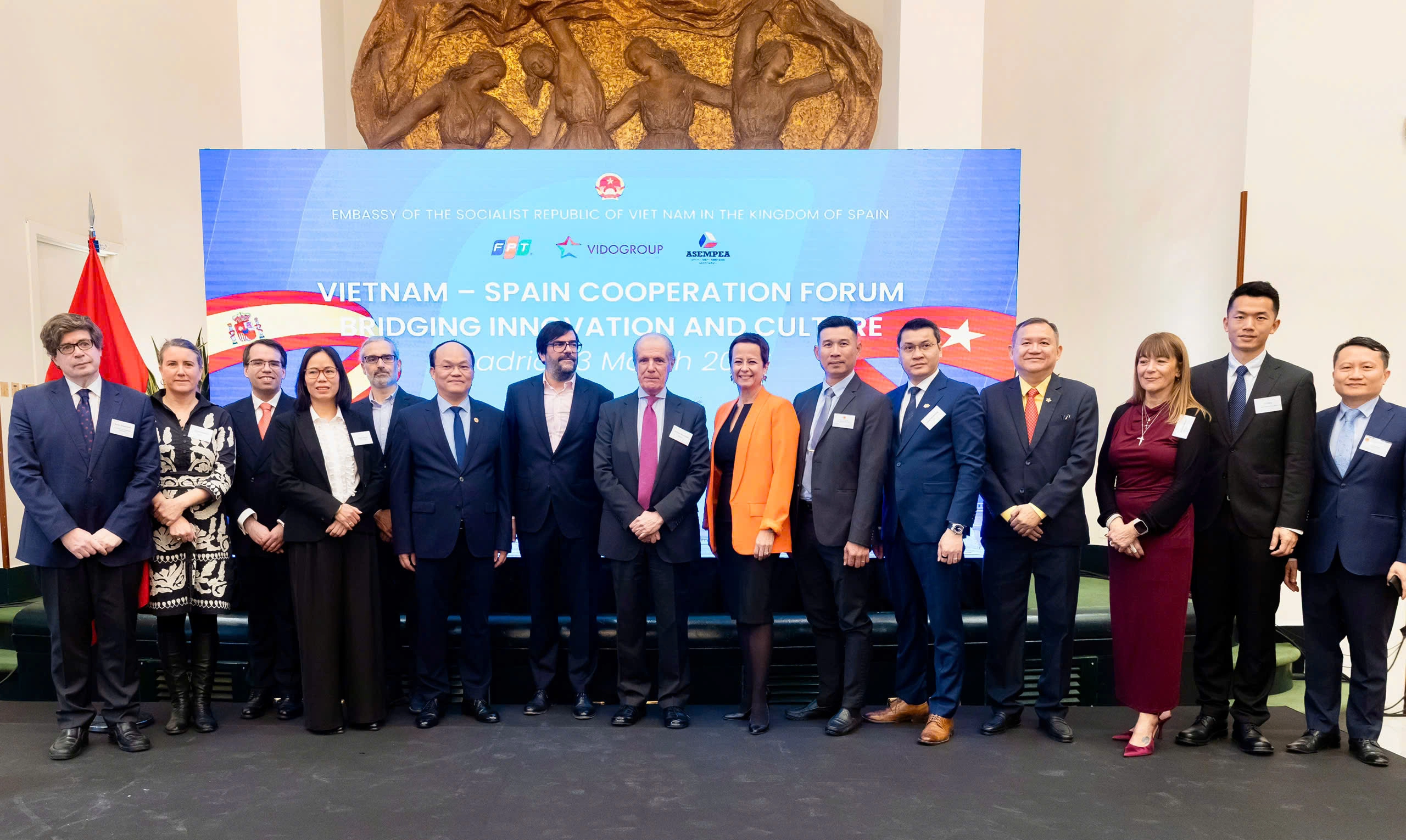
Madrid recently hosted the Vietnam–Spain Cooperation Forum: Bridging Innovation and Culture, co‑organized by the Embassy of Vietnam in Spain, Vidogroup, and FPT Corporation, in association with ASEMPEA, Vietnam Airlines, and Casa Asia. The forum brought together a diverse group of stakeholders - from government officials, international organizations, and business associations to leading enterprises, universities, and industry experts from both Vietnam and Spain - including regional leaders across multiple domains, from Aviation, Hospitality and Travel Technology, to Digital Transformation, Healthcare & Medical Services as well as Renewable Energy. Beyond business dialogue underscoring strong private‑sector interest in Vietnam, the forum also celebrated the deep cultural affinity between Vietnam and Spain - expressed through shared traditions, cuisine, and people‑to‑people exchange as foundations for long‑term partnership.
Strengthening Bilateral Ties
In his opening remarks, H.E. Doan Thanh Song, Ambassador of Vietnam to Spain, framed the forum against a backdrop of deepening bilateral relations, shaped by recent diplomatic milestones and growing economic alignment. He highlighted Vietnam’s transformation into one of Southeast Asia’s most open and dynamic economies, with a population exceeding 100 million and nearly four decades of reform propelling the country to 34th globally by GDP and into the top tier worldwide for trade and investment attraction. The Ambassador pointed to Vietnam’s fast‑expanding digital economy - growing at around 28% annually - as evidence of a broader shift toward technology, innovation, and sustainable development. He emphasized that enterprise‑to‑enterprise collaboration would be critical in converting political momentum into tangible outcomes, identifying technology, digital transformation, tourism, and cultural exchange as priority areas for more substantive, forward‑looking cooperation.
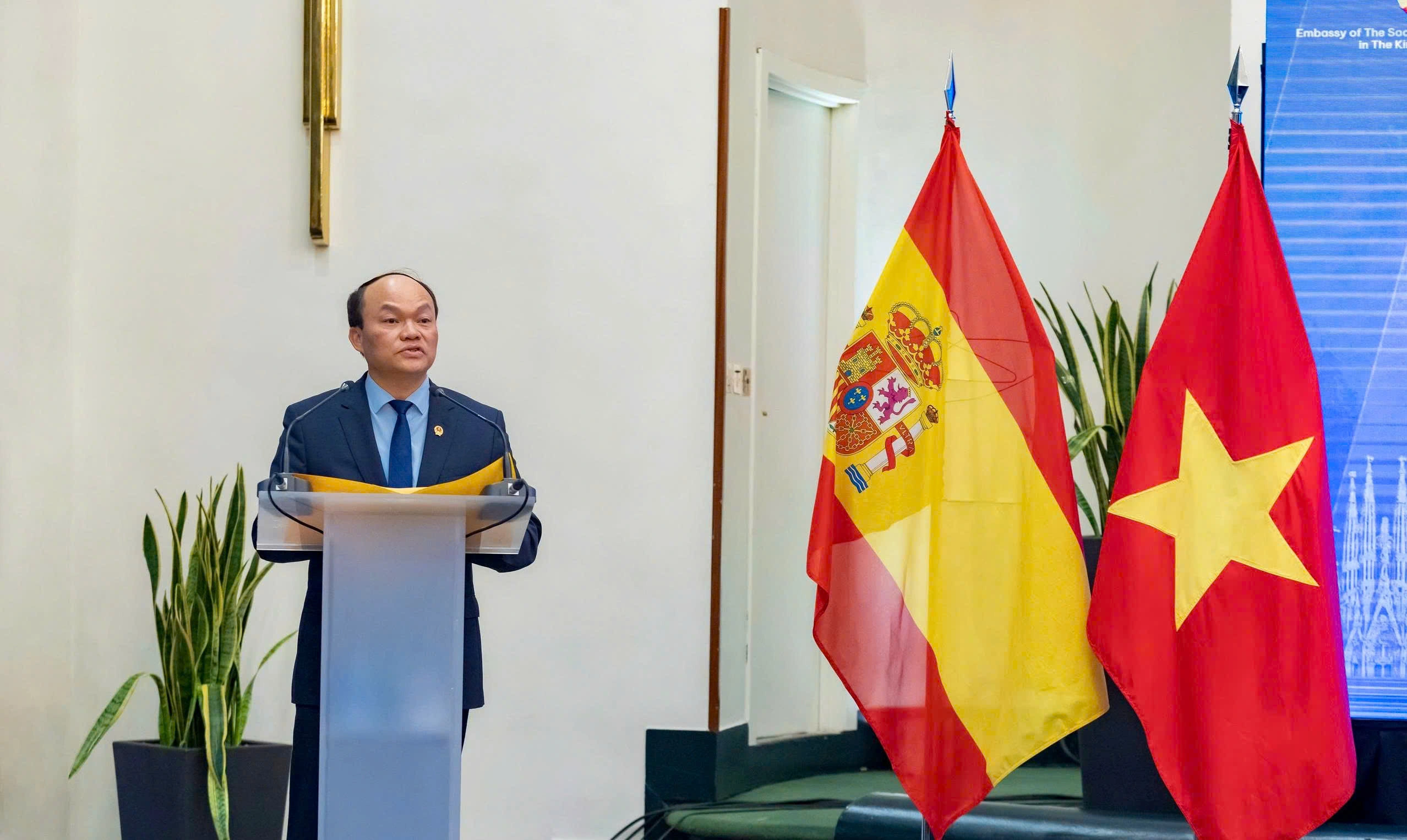
Building on this perspective, Mr. Juan Luis Jimeno, General Director of Economic and Commercial Intelligence at Spain’s Ministry of Economy, Trade and Business, illustrated how this strategic alignment is already translating into measurable progress. He noted that Vietnam has become Spain’s leading trading partner in ASEAN, with bilateral trade reaching €6.4 billion last year and expanding in both directions, supported by a growing Spanish business presence of more than 60 companies in Vietnam across sectors including tourism, infrastructure, energy, and technology. Mr. Jimeno also highlighted strong momentum in people‑to‑people and sectoral exchange, citing nearly 100,000 Spanish visitors to Vietnam in 2025 and the country’s rise of 15 places in the UN E‑Government Development Index as signals of increasing confidence among Spanish enterprises, advancing toward higher‑value trade, investment, and long‑term cooperation.
Tourism as a Bridge Between Cultures
Tourism emerged at the forum not merely as an economic sector, but as a mechanism for cultural connection and long‑term partnership between Vietnam and Spain. The discussion included Vietnam’s industry leaders like Vidogroup and Vietnam Airlines, alongside European travel and technology companies, such as Amadeus and Meliá, as well as major Spanish travel groups like Barceló and Viajes El Corte Inglés. It reflected a shared view that tourism’s real value lies in its ability to connect people with place, heritage, and everyday life - transforming travel into a form of cultural exchange.
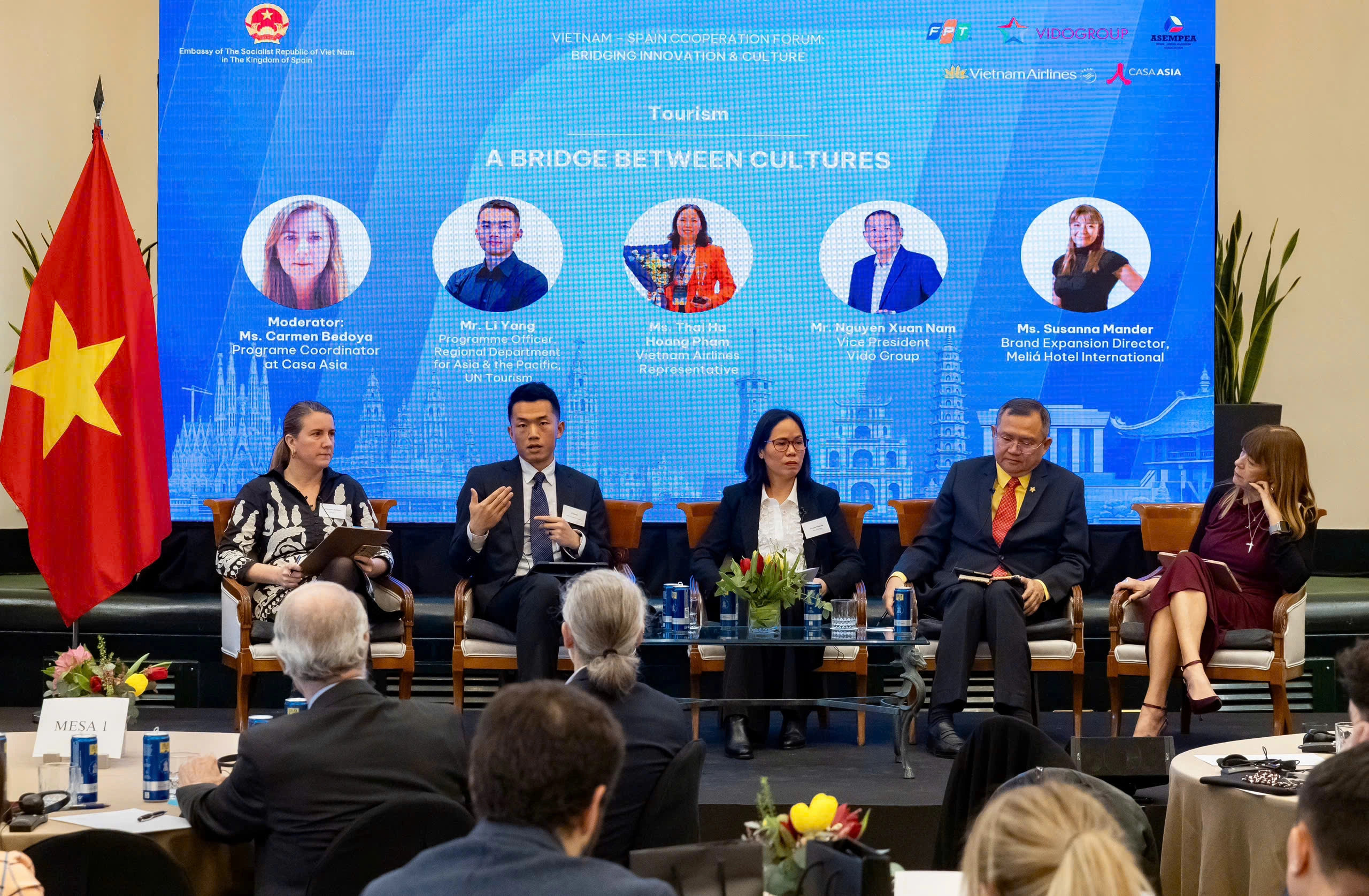
Vietnam’s appeal increasingly rests on what can be described as a “living culture.” Traditions, local food, and community rhythms are not preserved behind glass, but experienced daily - on streets, farms, rivers, and coastlines. This authenticity has become a defining advantage as global travelers move away from mass tourism toward experiences that are emotionally resonant and culturally grounded. As Nguyen Xuan Nam, Vice President of Vidogroup observed, “High‑end tourism today is no longer about facilities, but about emotion and authentic experiences that people carry with them long after the journey ends.”
This shift is already reflected in Vietnam’s tourism trajectory. The country welcomed 17.5 million international visitors in 2024, with arrivals rising nearly 39% year‑on‑year - the fastest growth rate among major ASEAN destinations. By 2025, international arrivals exceeded 21 million, underscoring both scale and rising expectations. Spanish travelers are an increasingly important part of this story, which however still remains modest compared to the more than 20 million Spaniards traveling abroad each year, pointing to significant untapped potential.
Vietnam Airlines positioned itself as an active enabler of growth, focusing on connectivity, experience, and collaboration to unlock Spanish demand. While the airline already operates around 37 weekly connections between Spain and Vietnam via major European hubs, plans to introduce a direct Madrid - Hanoi route were highlighted as a near‑term catalyst to scale the market. Beyond access, the airline's representative emphasized elevating the inflight experience as part of destination storytelling, aligned with its ambition to become a five‑star airline by 2030. Growing interest from Spain - particularly in honeymoon and corporate incentive travel - is being addressed through closer coordination with Vietnamese tourism partners such as Vidogroup, to convert interest into distinctive, experience-led journeys.
Spanish tourism partners bring an additional layer of confidence to this opportunity. Spain’s position as a global tourism leader - generating over $100 billion in tourism receipts annually - offers deep expertise in destination management, premium hospitality, and sustainable tourism at scale. “Spain and Vietnam represent two ends of the tourism spectrum - maturity and momentum,” said Li Yang of UN Tourism. “Our task is to provide the architecture that allows this exchange to translate into sustainable cultural and economic value.” The growing footprint of Spanish hospitality and tourism groups in Vietnam signals belief in the market’s long‑term fundamentals, while also pointing to opportunities for deeper collaboration in experience design, skills transfer, and visitor value creation.
Technology and AI: Vietnam’s Momentum with FPT at the forefront
Technology and AI were framed at the forum as the clearest illustration of how Vietnam–Spain cooperation is shifting from potential to execution. The discussion reflected a shared view that while Spain operates within one of Europe’s most mature digital and regulatory environments, Vietnam has emerged as a fast‑scaling technology hub - capable of translating innovation into delivery at industrial scale.
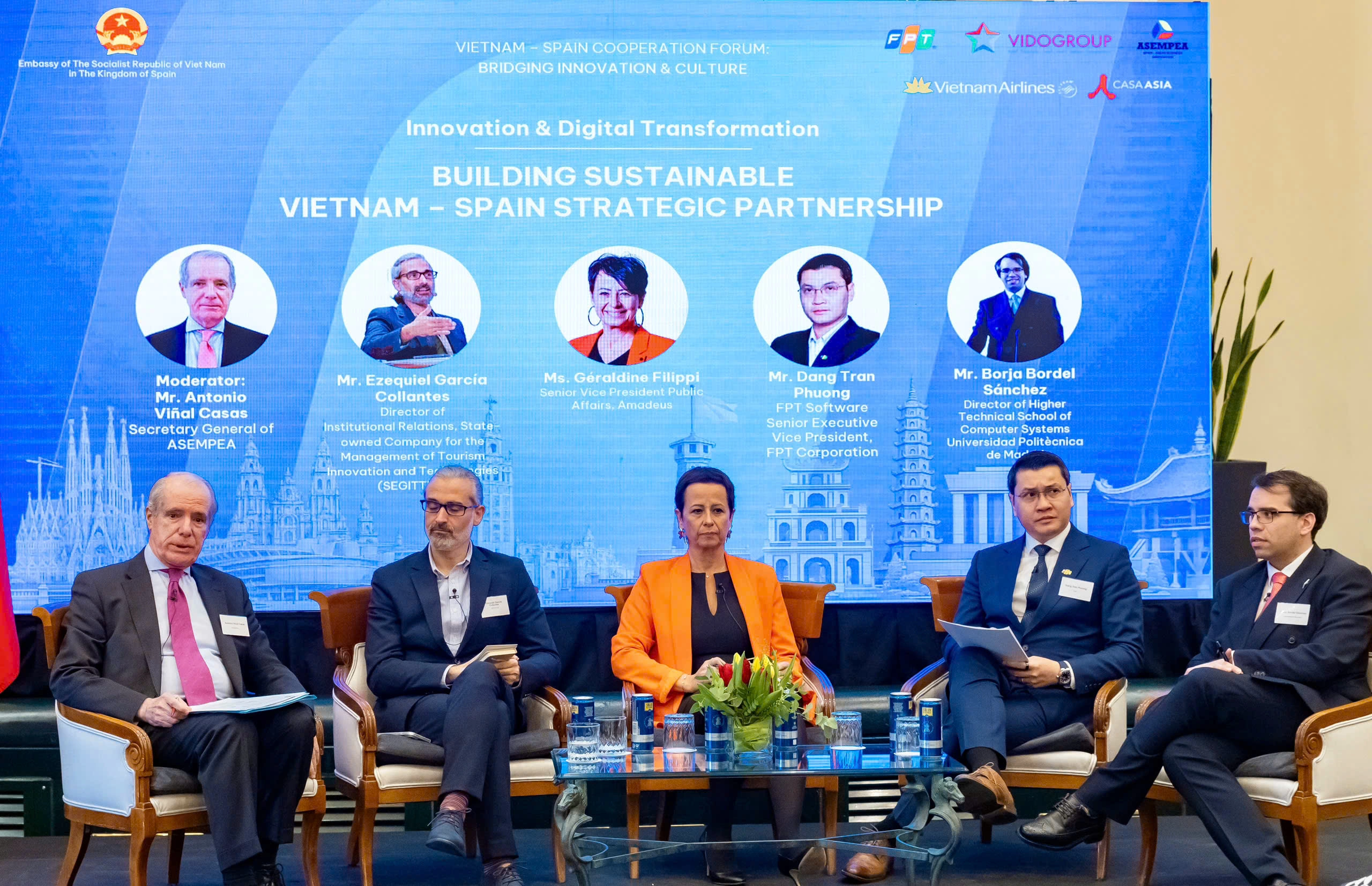
From the perspective of FPT Corporation - Vietnam’s pioneer and leader in technology and IT services, this complementarity is already tangible. As the largest IT services company in Southeast Asia, FPT operates across 30 countries and continues to expand its European footprint, with Spain identified as an important market for local presence. Vietnam’s broader digital economy is underpinned by a robust talent base - about one million skilled IT professionals - providing the scale required for long‑term global delivery. FPT has made AI a core investment priority, developing its own AI platforms, partnering with NVIDIA on advanced computing, and recently joining global 6G initiatives alongside Intel and Qualcomm to shape next‑generation connectivity.
Beyond scale, emphasis was placed on engineering discipline and trust. FPT highlighted how AI is already embedded across real‑world systems - from public‑sector platforms to enterprise software - generating data and use cases in areas such as taxation, insurance, and national digital services. With FPT University operating as an integrated part of the ecosystem, AI skills are applied directly to education, industry, and government needs, enabling graduates to enter the workforce with production‑ready capabilities rather than purely academic training. This model, rooted in a large, digitally native population of more than 100 million people, positions Vietnam as a living laboratory for data‑driven innovation with global relevance.
Spanish and European partners reinforced this view by pointing to Vietnam’s growing role as a trusted IT and AI services hub for EU companies. Spain’s strengths in complex system integration - particularly in energy, mobility, and regulated industries - were seen as highly complementary to Vietnam’s execution capacity. “For Spanish companies, the next chapter with Vietnam is not about sourcing - it’s about building strategic delivery centers, long-term managed services, and co-investing in talent,” said Dang Tran Phuong, FPT Software SEVP, FPT Corporation. “With FPT’s global delivery network across Vietnam, Europe, and the Americas - including teams in Mexico, Costa Rica, and Colombia - we can balance cost efficiency with resilience and speed to market.”
Looking ahead, trust emerged as the defining currency of EU–Vietnam technology partnerships. “Vietnam is increasingly relied upon by European companies as a technology and IT services partner,” said Géraldine Filippi, SVP Public Affairs at Amadeus. “For AI to deliver real value, data must move securely and predictably across borders - and that requires geopolitical stability, regulatory clarity, and interoperable digital infrastructure.” In this context, Vietnam’s unique position - maintaining comprehensive strategic partnerships with 15 countries including the US, UK, Japan, and China - adds a favorable geopolitical dimension to its attractiveness as a long‑term technology partner for Europe. Together, these factors position Vietnam, with companies like FPT at the forefront, not just as a participant in global digital transformation, but as a co‑shaper of its next phase.
From Dialogue to Delivery
The forum concluded with a shared message: Vietnam-Spain cooperation is ready to move from dialogue to delivery. By aligning tourism, technology, and talent, and by leveraging trusted partners like Vidogroup, Vietnam Airlines, and FPT, enterprises from both countries can build partnerships that are resilient, scalable, and future‑oriented.