





















The UK healthcare system has entered a period in which technology is no longer a supporting layer around care delivery. It is becoming part of the operating foundation on which future access, productivity, and patient experience will depend. Covid pandemic accelerated demand for digital tools across the NHS, but the longer-term effect has been broader than rapid adoption alone. It has made clear that healthcare performance increasingly depends on the ability to modernize systems, connect data, and support care beyond the hospital.

England’s 10 Year Health Plan now gives the transition a clearer direction through three major shifts from hospital to community, analogue to digital, and sickness to prevention. The ambition is to make care more local, preventive, and digital by default, supported by a Neighbourhood Health Service that connects services around patients rather than institutional boundaries.
Demand continues to rise, chronic conditions are placing heavier strain on services, and healthcare organizations are being asked to improve outcomes while working within workforce and financial constraints. In this environment, technology is moving closer to the center of system redesign. For global technology partners, the opportunity is also becoming clearer, not as providers of tools in isolation, but as contributors to practical transformation inside one of the world’s most complex and highly regulated healthcare environments.
System pressure and fragmented foundations
Pressure on UK healthcare is rising from both the demand side and the system side. Long-term conditions such as hypertension continue to increase the need for continuous management, while treatment adherence remains inconsistent and patient visibility outside formal care settings is often limited. In the UK, around 30 percent of adults are estimated to have hypertension, with around 15 percent of those cases going untreated. Clinicians are also working under heavy administrative burden, making it harder to respond early and consistently across the care journey.
At the same time, many of the systems meant to support care remain fragmented. Legacy IT infrastructure, siloed data, limited interoperability, and growing cyber risk continue to slow coordination and restrict access to reliable information. These issues are not unique to healthcare. In FPT’s 2026 global research with Forrester Consulting, 41 percent of decision-makers cited difficulty integrating AI models into existing systems and workflows as a top challenge, while 38 percent pointed to data silos and 33 percent to security risks. In healthcare, those barriers carry an added consequence because they affect not only efficiency, but also continuity of care and the ability to act on patient information at the right time.
Shift to digital, data-driven, and home-based care
Under these conditions, technology is becoming less about digitizing isolated processes and more about enabling a different model of care delivery.
Remote monitoring, digital health platforms, and connected IoMT ecosystems are becoming more important across UK healthcare. Their value lies not only in digitizing existing tasks, but in enabling a different model of care. Care becomes more continuous instead of episodic, more informed by real-time data instead of delayed response, and more focused on prevention rather than escalation after conditions have already worsened.
A more connected care model is starting to show why this shift matters. In digitally enabled medication management, a unified IoMT ecosystem can connect patients, devices, and clinicians through a single environment, improving visibility and strengthening engagement outside traditional care settings. In one such model, patient engagement helped lift medication adherence to 75 percent, while the patient-centric mobile application achieved an 89 percent retention rate, suggesting that connected and personalised care can support more sustained behavior change over time.
The move toward digital by default also places greater importance on the NHS App. As the primary digital access point, the app is expected to connect patients with appointments, advice, care plans, health information, and professional support. Integration with wearables, remote monitoring tools, and shared health records could extend its role beyond service access toward more continuous and personalised health management.
AI and data platforms gaining traction
AI and data platforms are beginning to attract more serious attention across healthcare. In the UK, the strongest AI use cases are often the most operationally useful. Diagnosis, administration, and day-to-day operations are all areas where AI can reduce burden, improve efficiency, and support faster decision-making when paired with stronger data foundations. Progress, however, depends on more than AI deployment alone. Frameworks such as the FPT CASAN framework can help organizations assess maturity more clearly across data, governance, integration, and operating models before scaling AI more broadly.
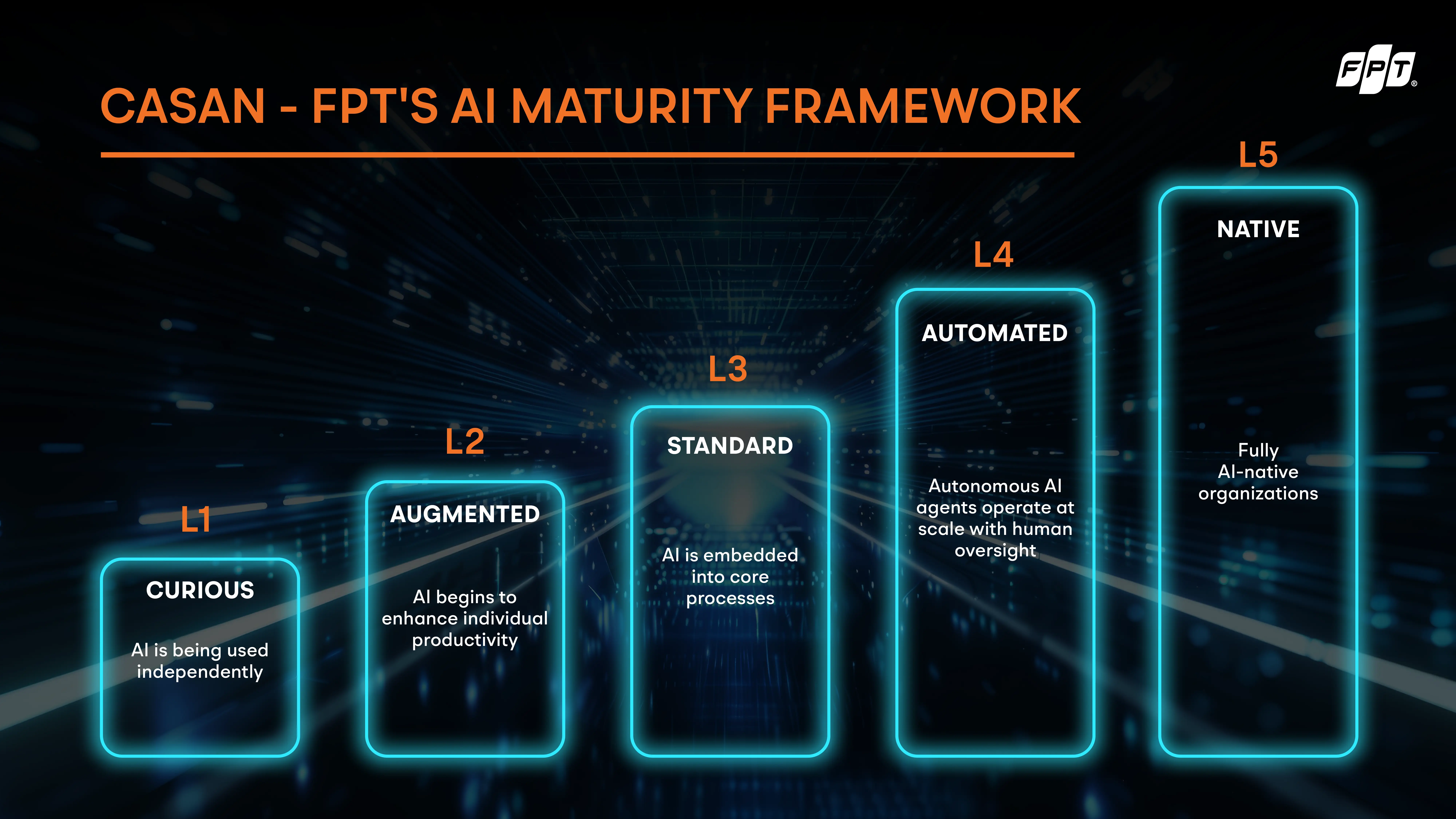
Data platforms are equally important. Their value lies in making information more usable across settings and workflows, allowing providers to generate real-time insight, improve care coordination, and manage demand more effectively. A stronger data environment also creates the conditions for safer and more scalable digital transformation. AI can only deliver meaningful value when the underlying systems, governance, and interoperability are strong enough to support it.
Practical delivery in a complex healthcare environment
Turning digital ambition into operational value requires more than new tools alone. In healthcare, progress depends on the ability to modernize legacy systems, connect fragmented data, strengthen security, and fit new technologies into real care workflows. This is especially true in the UK, where transformation is unfolding inside a highly regulated system shaped by interoperability challenges, sensitive patient data, and pressure to improve productivity without disrupting frontline delivery.
In the UK hypertension case, an NHS-approved IoMT ecosystem developed with FPT connected wearable devices, patients, and clinicians through a secure cloud-based platform. The result was stronger remote visibility, more timely intervention, and a clearer model for home-based, data-driven care. As healthcare organizations move from isolated pilots to wider deployment, experience in digital platforms, interoperability, remote care, and secure delivery in regulated environments becomes a more meaningful differentiator.
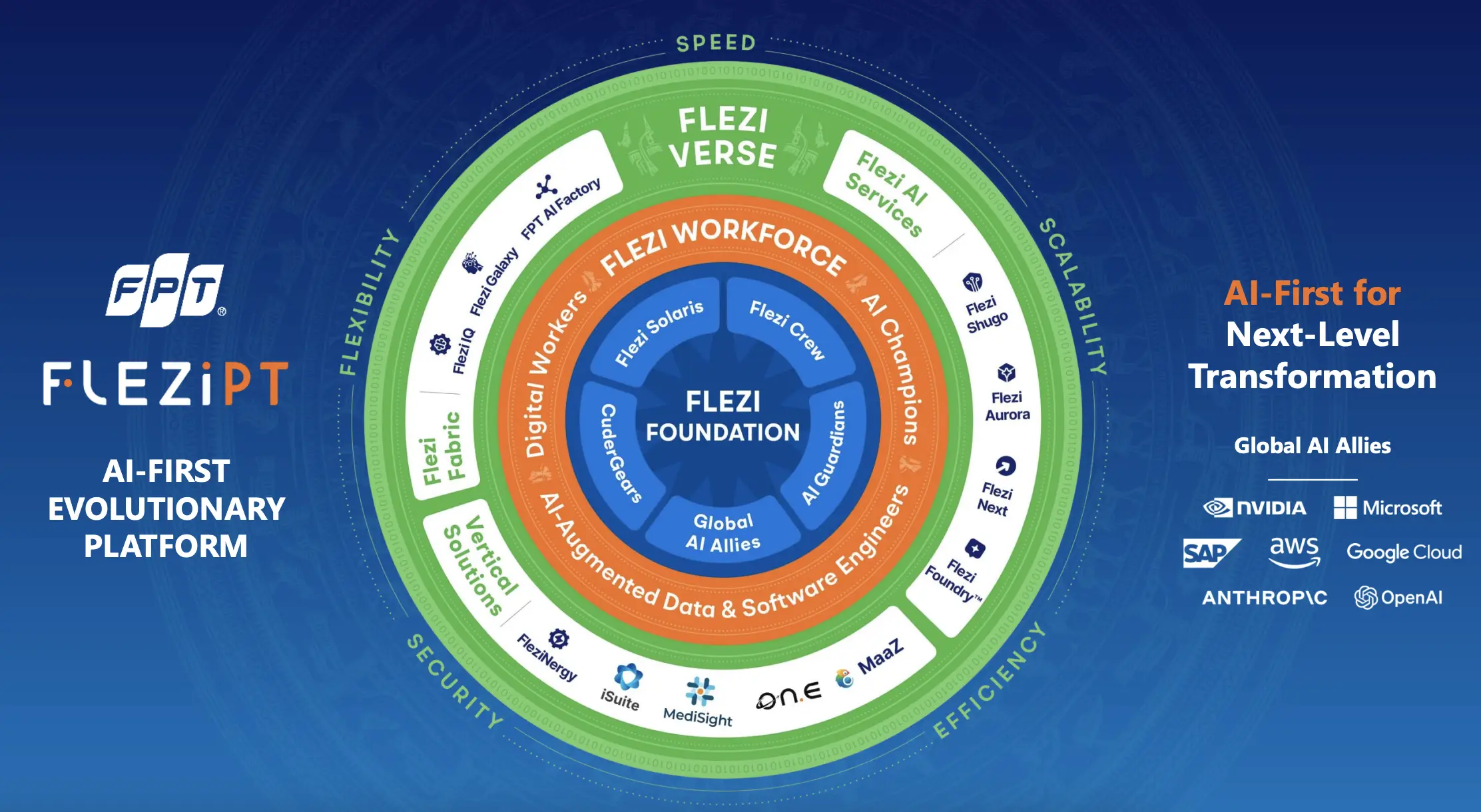
FPT’s healthcare capabilities are also shaped by the standards expected in highly regulated clinical environments. From AI-powered imaging and interoperability to intelligent health platforms and surgical data systems, the emphasis is not only on innovation, but on building with compliance, security, and clinical reliability in mind, aligned with frameworks such as HITRUST r2, HIPAA, ISO 13485, and FDA design controls. FleziPT supports FPT’s healthcare transformation efforts by linking modernization, interoperability, and data-driven execution across regulated care environments.
The path forward for UK healthcare technology
The NHS 10 Year Health Plan provides a clear destination through community-based care, digital-by-default access, and a stronger emphasis on prevention. Delivery will depend on whether healthcare organizations can modernize legacy systems, connect data securely, and integrate new technologies into frontline workflows without widening inequalities or disrupting care.
Long-term value will come from modernization that is connected, secure, and closely tied to care delivery. In that environment, the role of technology partners is also changing. Success will depend less on offering isolated digital tools and more on helping healthcare organizations build systems that are resilient, interoperable, and ready for the next phase of care.


