As enterprises move beyond AI experimentation, the conversation is shifting from technological possibility to business execution. The challenge is no longer whether AI can create value, but how organizations can modernize legacy systems, preserve institutional knowledge, secure critical operations, and scale AI across the enterprise with speed, governance, and trust.
At the Halong Sapphire Summit 2026, FPT presented FleziPT at our exhibition as its answer to that challenge. More than a collection of AI solutions, FleziPT is an integrated ecosystem designed to help enterprises transform across the full AI journey, from modernizing decades-old systems to operating AI-native businesses at scale.
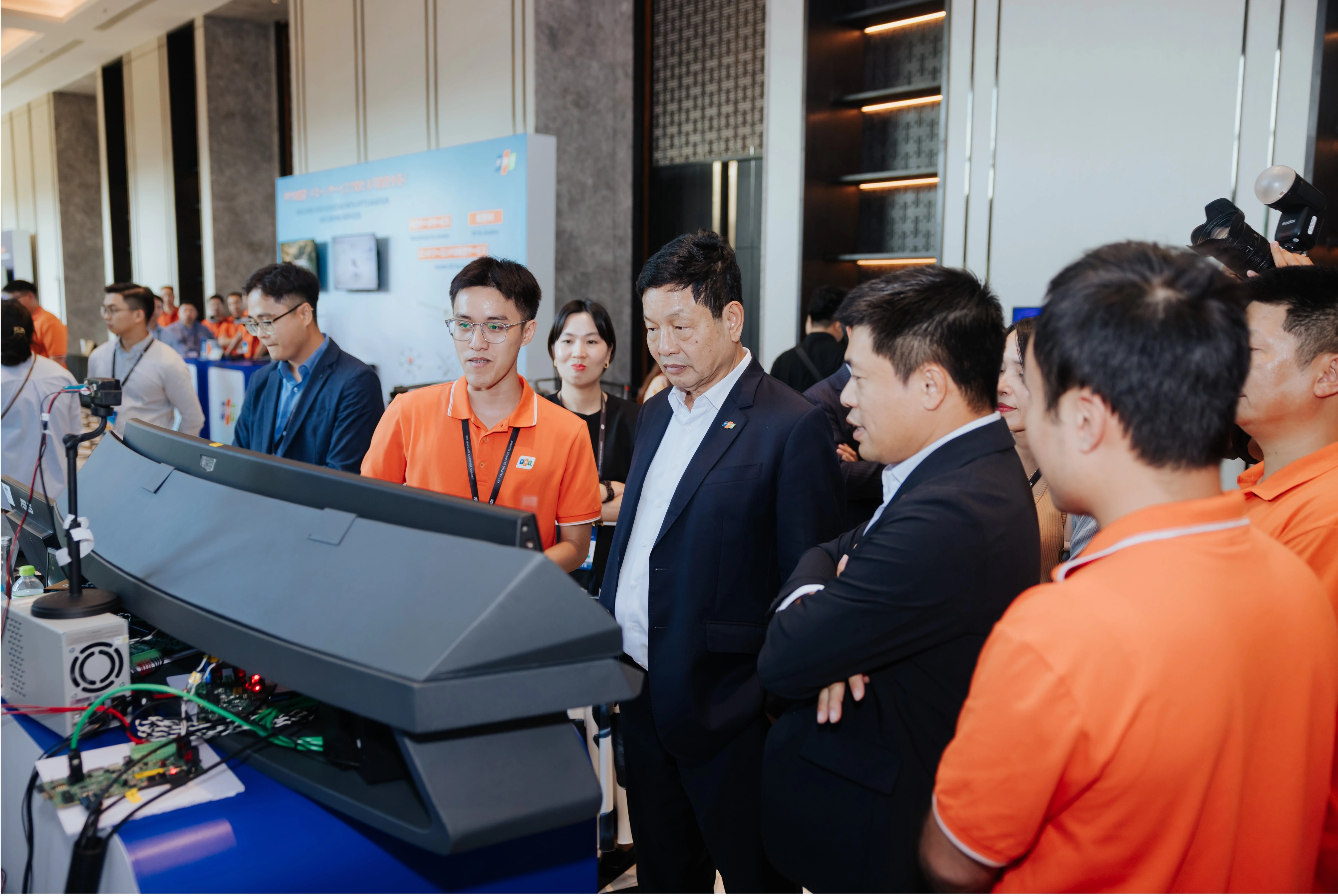
The Halong Sapphire Summit 2026 showcased FPT’s enterprise AI solutions ecosystem, with three focused zones: Vertical AI, Horizontal AI, and AI Experience Zone
The platform brings together four interconnected pillars that address some of the most pressing barriers to enterprise AI adoption, including legacy complexity, workforce scalability, operational resilience, and industrial transformation.
Modernizing the foundation for AI-native growth
For many organizations, the biggest obstacle to AI transformation is not AI itself. It is the technology foundation underneath it. This challenge is particularly acute in Japan, where decades of investment in highly customized and business-critical systems have created environments that are reliable, yet increasingly difficult to evolve. FleziPT addresses this challenge through a modernization approach that combines migration, knowledge preservation, and AI-driven validation.
At its core, Flezi NEXT helps enterprises modernize and migrate legacy applications into open, cloud-ready platforms. The solution is backed by more than 15 years of digital transformation experience, over one billion lines of code analyzed and migrated, more than 300 modernization projects delivered, and support for over 40 platforms, languages, and databases.
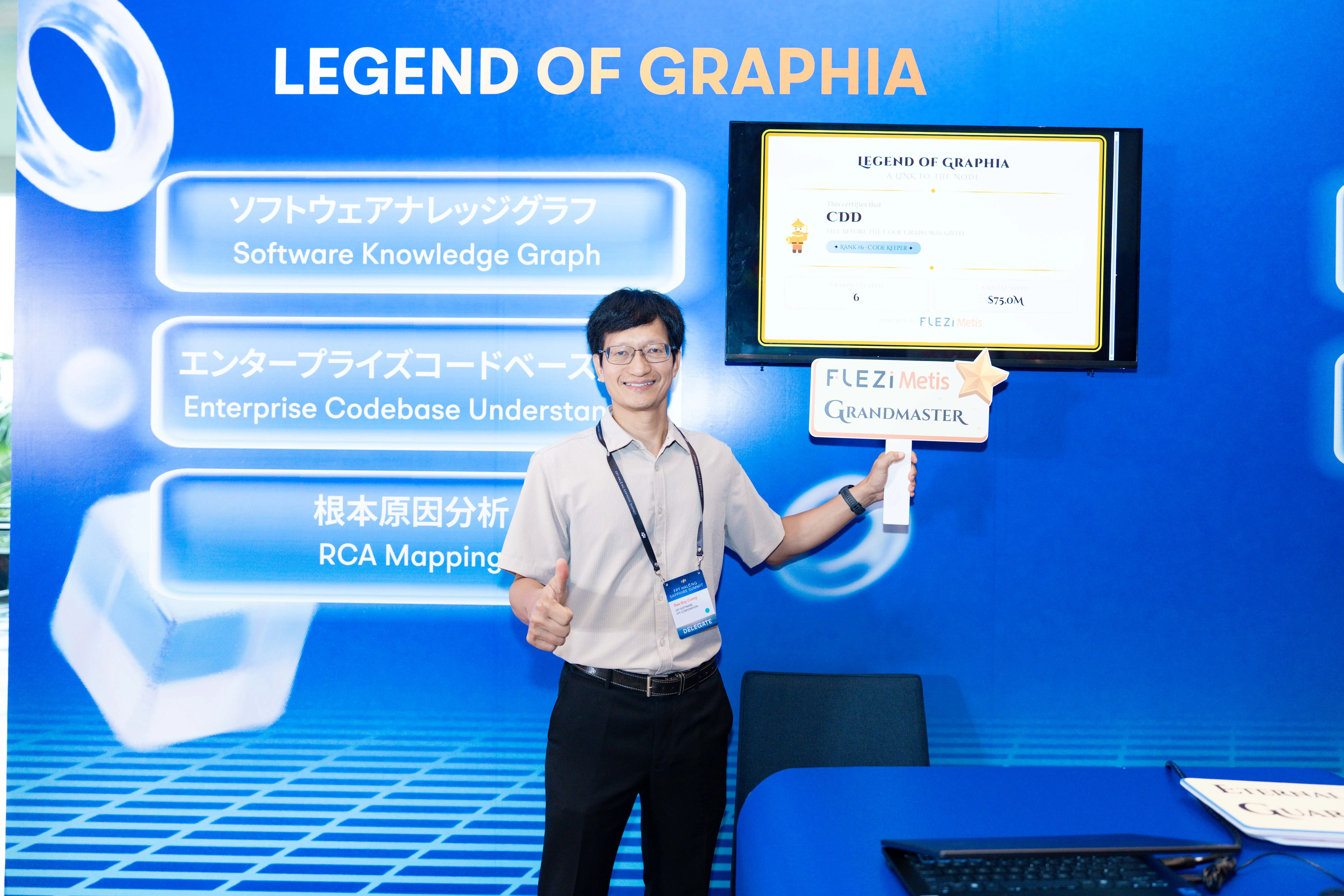
Flezi Metis complements this effort by extracting and preserving business knowledge embedded in legacy code and enterprise documents, giving both engineers and AI agents the context required to evolve complex systems. In customer engagements, the solution has demonstrated 3x lower token costs and a 50 percent reduction in knowledge search effort. Flezi Helios completes the modernization cycle through AI-powered testing and validation, ensuring transformed systems maintain business continuity and expected outcomes.
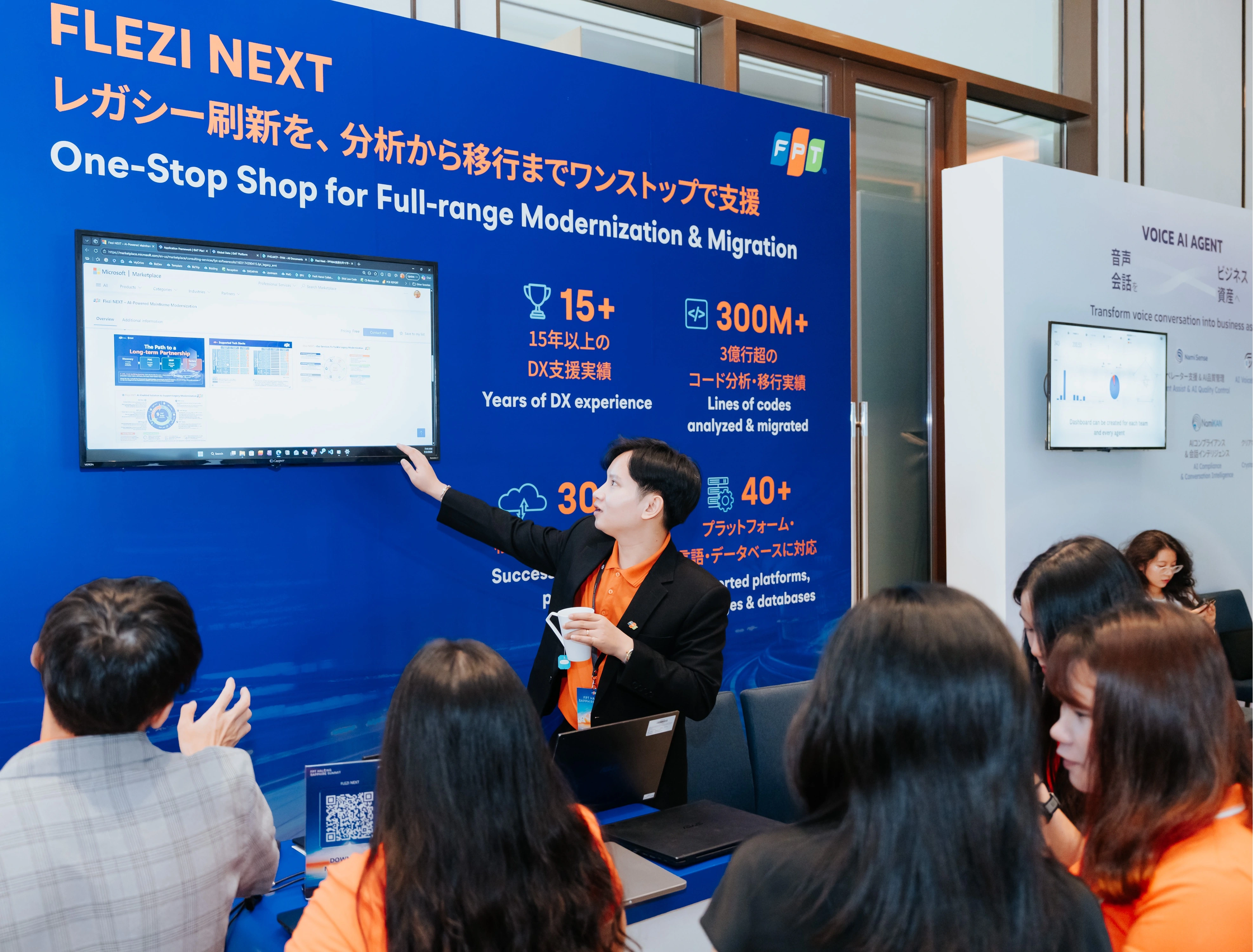
Flezi NEXT showcases FPT’s legacy modernization capabilities at scale
These capabilities are industrialized through FPT Digital Foundry™, FPT's AI-augmented delivery model that combines agentic engineering, governance, and operational discipline to accelerate modernization while maintaining quality and predictability. Through agentic delivery, organizations can achieve more than 30 percent gains in delivery velocity.
The importance of this foundation was reinforced by Teruyasu Kameyama, Managing Director of Solution Consulting at FPT Japan, who emphasized that successful modernization requires more than AI alone. It depends on the combination of technology, proven methodologies, and skilled talent. By applying AI agents throughout modernization programs, FPT has helped reduce project preparation efforts by approximately 70 percent while shortening overall project timelines by around 30 percent.
Scaling AI from pilots to an enterprise workforce
Once the foundation is modernized, a new challenge emerges. Enterprises need to move beyond isolated AI use cases and establish a scalable operating model that allows AI to work alongside employees across the organization.
FleziPT addresses this through an interconnected AI workforce ecosystem. Flezi Galaxy serves as the orchestration and governance platform for a unified AI workforce, enabling organizations to deploy, manage, and scale AI agents across business and technology functions from a single operating framework.
Flezi Polaris extends these capabilities into day-to-day business operations, creating an environment where people and AI agents can collaborate seamlessly. Meanwhile, Flezi Aurora provides the observability, automation, and managed services needed to keep these AI-powered operations reliable and efficient. Through its Power Insights capabilities, organizations can achieve 60-80 percent reduction in alert noise, 30-50 percent reduction in L1 workload through automation and deflection, and 40-70 percent faster mean time to resolution through AI-assisted L2 and L3 operations.
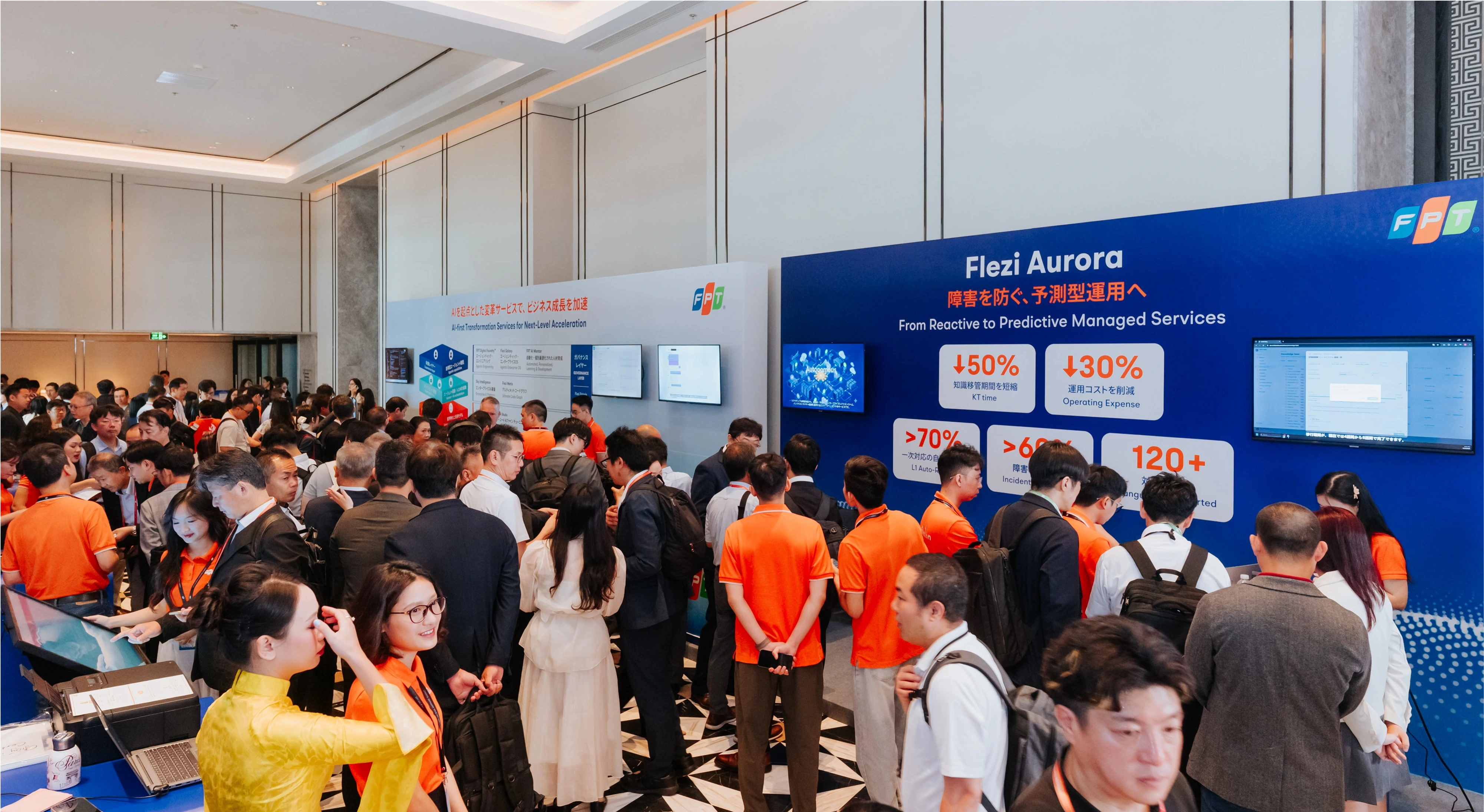
Flezi Aurora brings observability, automation, and managed services to keep AI operations reliable and efficient
This approach also extends the role of FPT Digital Foundry™ in the modernization journey. Speaking at the event, Frank Bignone, FPT Software’s Senior Vice President and Head of Corporate Strategy & Growth, emphasized that enterprises must move beyond using AI as a productivity tool and rethink how technology services are designed, governed, and continuously improved.
As Frank also noted, the future workforce is neither human nor AI. It is a hybrid workforce where people lead, AI agents accelerate execution, and organizations continuously learn and evolve.
Building trust, resilience, and operational confidence
When AI becomes increasingly embedded in core business processes, security and quality become business imperatives rather than technical considerations.
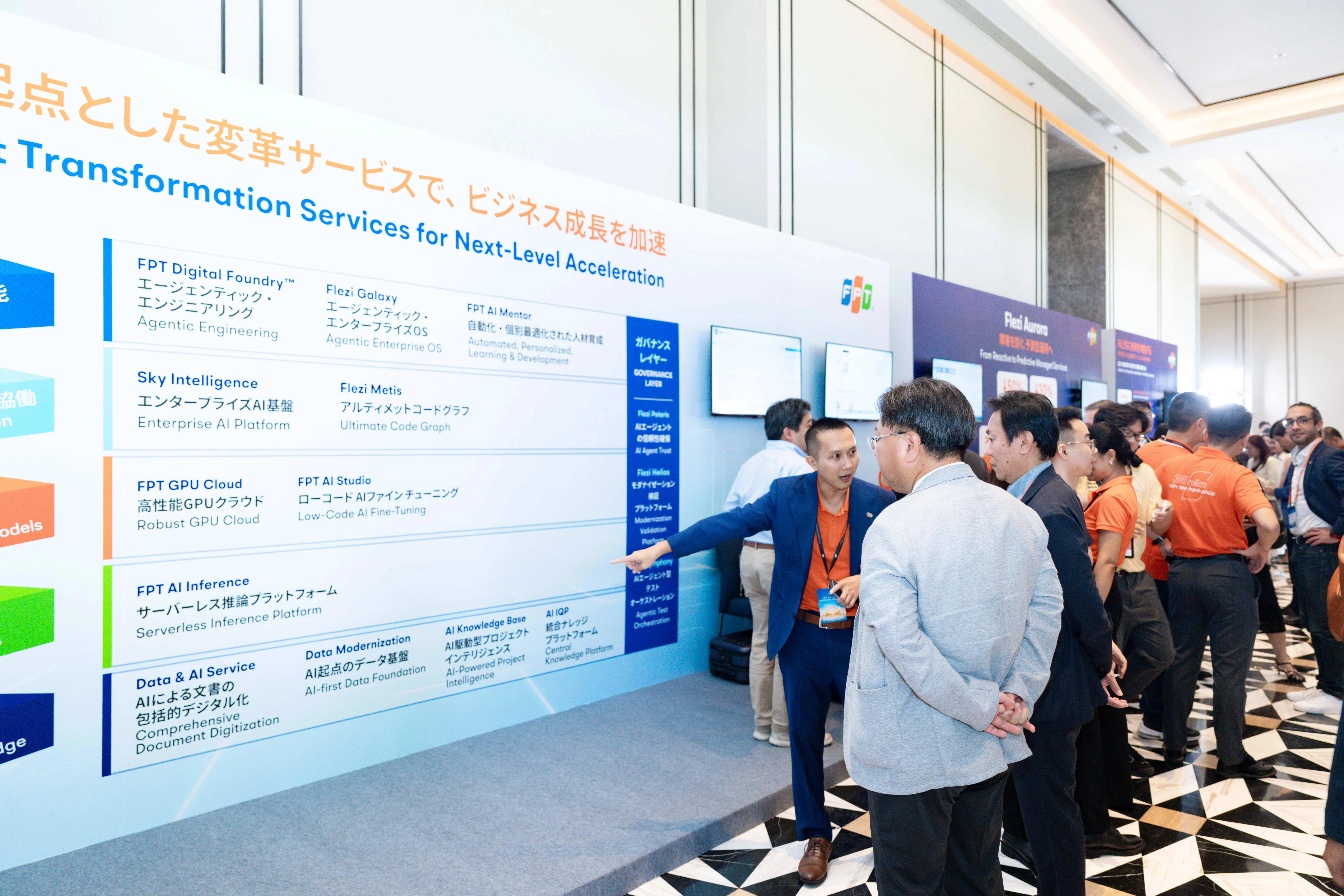
FleziPT platform is designed to address critical challenges in AI transformation
Within the FleziPT ecosystem, Flezi Shugo strengthens cyber resilience through AI-powered security operations, threat detection, and autonomous penetration testing. Autonomous penetration testing can now reduce service onboarding time from 5–10 days to under 2 hours, and remediation validation from 3–5 days to under 60 minutes. At the same time, Flezi Symphony introduces Agentic Quality Engineering to help ensure modernized systems remain reliable, compliant, and production-ready throughout their lifecycle.
Together, these capabilities provide enterprises with the confidence to scale AI in environments where operational continuity, governance, and risk management are critical.
Extending AI beyond digital systems
FleziPT's vision extends beyond software and enterprise applications into the physical world of factories, warehouses, and supply chains.
Flezi Astra provides the architectural foundation for the Factory of the Future, connecting operational technology, automation, AI, and digital intelligence. Built on this foundation, Flezi UDP creates a unified operational data layer across machines, sensors, and business systems, while Flezi Ops, Flezi QMS, and Flezi WMS help optimize manufacturing operations, quality management, compliance, warehouse performance, and inventory flows.
The result is a connected operational environment where organizations can move beyond fragmented processes toward real-time visibility, predictive decision-making, and increasingly autonomous operations.
Turning AI ambition into enterprise execution
According to FPT EVP and FPT Software CEO Pham Minh Tuan, successful AI transformation is not primarily a technology challenge but an execution challenge. To address this, FPT combines the CASAN transformation framework, the FleziPT ecosystem, and an AI-augmented workforce to help enterprises modernize legacy environments, strengthen resilience, preserve organizational knowledge, and accelerate future growth.
Backed by global alliances including Microsoft, SAP, NVIDIA, and Anthropic, FPT positions FleziPT as a practical pathway for organizations seeking to become AI-native, resilient, and future-ready.
FPT’s AI-enabled ecosystem is further empowered by FPT CASAN, the five-level AI-native capability framework
Rather than approaching AI transformation through disconnected tools and isolated pilots, FleziPT brings modernization, AI workforce orchestration, security, and intelligent operations into a single ecosystem. In doing so, it provides enterprises with what many organizations now need most: a clear path from AI ambition to measurable business execution.