A post-pandemic cycle that reshaped FPT
The years following Covid-19 marked a turning point for the global technology landscape, as demand for digital transformation, cloud, and artificial intelligence accelerated across industries. For FPT, this period became a catalyst for growth, as rising global demand for technology services drove strong expansion in both scale and market reach.
Between 2021 and 2025, FPT doubled both revenue and profit before tax, marking not just recovery but a decisive shift in scale and positioning. By 2025, the company had emerged with a broader international footprint and a clearer direction centered on artificial intelligence, advanced technologies, and outcome-driven delivery.

FPT sets direction for tech innovation, with AI as core enabler at the FPT Annual General Meeting 2026
FPT’s post-pandemic growth was not driven by a single recovery year, but by sustained expansion over five consecutive years. Revenue rose from 35,657 billion VND in 2021 to 70,113 billion VND in 2025, while profit before tax increased from 6,337 billion VND to 13,044 billion VND over the same period. Even against a backdrop of inflation, supply chain disruption, geopolitical volatility, and shifting technology demand, the company maintained steady double-digit growth and strengthened its overall business footing.
From IT services to AI-first and outcome-driven delivery
The evolution of FPT’s strategy reflects broader changes in enterprise demand. Organizations have moved beyond focusing on cost efficiency toward improving productivity, speed, and measurable outcomes, with artificial intelligence becoming a core enabler.
In FPT’s own 2025 strategy, the competitive challenge had become clearer. Organizations could no longer rely on scale or experience alone. They needed to adapt faster, reduce costs more structurally, and raise productivity in ways that traditional delivery models could not fully support.
FPT’s earlier momentum in digital transformation, cloud, automation, and data evolved into a more deliberate AI-First direction. By 2023, digital transformation services already accounted for nearly half of revenue from foreign IT services, showing that higher-value work had become central to the business. In 2024, FPT formally anchored its strategy around five pillars, AI, semiconductors, automotive, digital transformation, and green transformation, with AI at the center. By 2025, the shift had become more operational, with AI integrated more deeply into products, services, and internal delivery, alongside the launch of
FleziPT as a key platform milestone.
Expanding role in Vietnam’s digital transformation
Alongside its global expansion, FPT also strengthened its role in Vietnam’s national digital transformation agenda. The company worked with more than 40 provinces and cities in 2021 and steadily expanded its reach in subsequent years, with cooperation agreements rising from 14 localities in 2021 to 31 in 2024.
By 2025, the scope had moved further into national-scale systems and strategic programs. FPT was working with ministries and state agencies on national databases, digital legal platforms, financial systems, and wider transformation initiatives aligned with Resolution 57 and related priorities. The company’s position had grown beyond enterprise-level execution into a more embedded role in the digital infrastructure supporting Vietnam’s long-term modernization and technological self-reliance.
Moving beyond services into strategic technologies
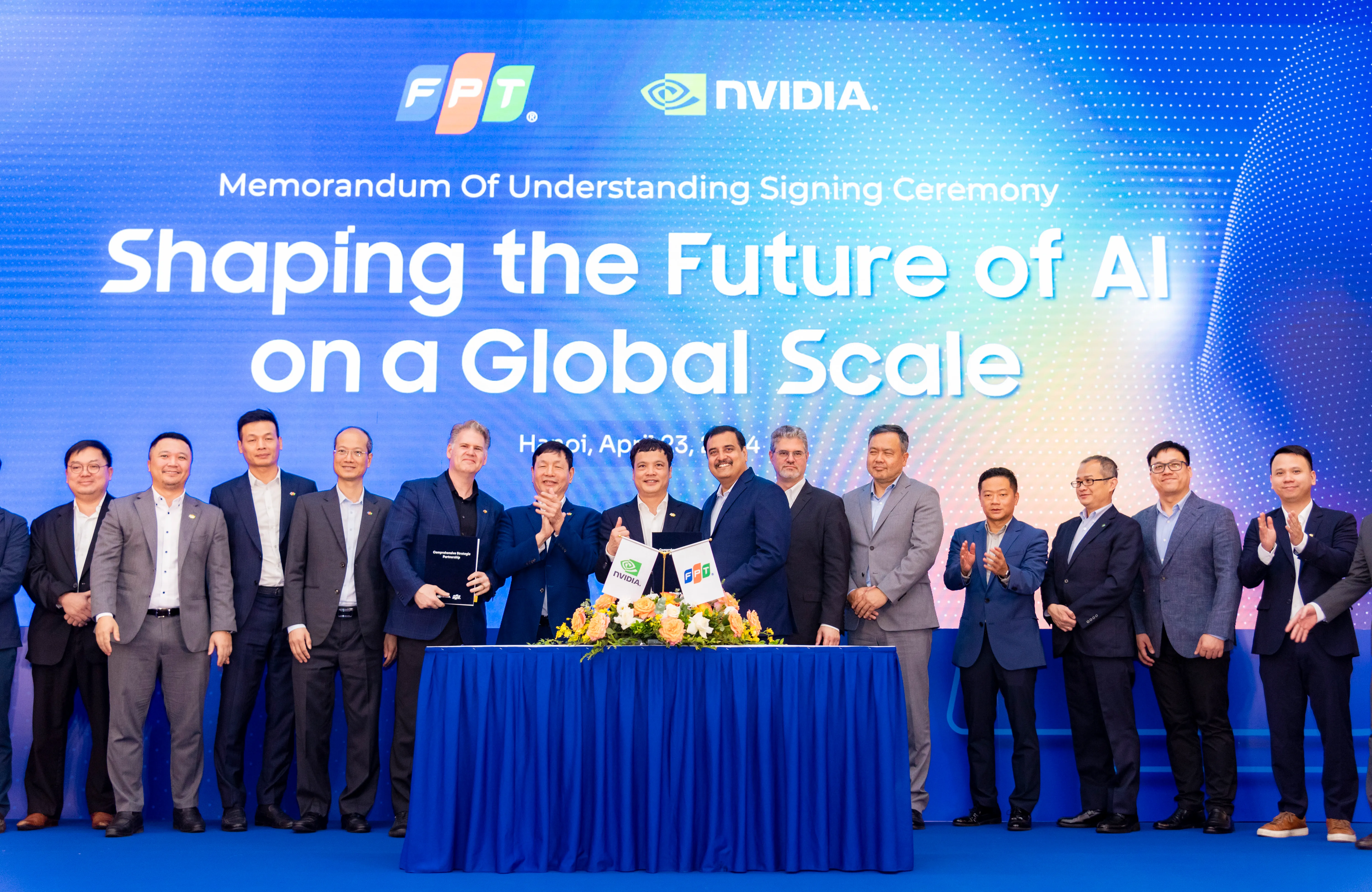
Another clear marker of this period was FPT’s push beyond traditional services into semiconductors and AI infrastructure. The company launched its first line of microchips in 2022, then expanded steadily into chip development, AI infrastructure, and more advanced positions in the technology stack. In 2024, FPT opened two AI factories in Vietnam and Japan through its partnership with NVIDIA. Built on NVIDIA HGX B300, H200, and H100, the platform was designed to meet the demands of next-generation AI and high-performance computing workloads.
The strongest force behind that expansion was overseas IT services. Revenue from foreign markets reached 14,541 billion VND in 2021, then continued climbing as FPT crossed the 1 billion USD milestone in international market sales and entered the group of billion-dollar IT service businesses. By 2025, revenue from IT services for foreign markets had reached 35,382 billion VND, firmly establishing this segment as the company’s leading growth pillar.This direction is further reinforced by frameworks such as CASAN, which provide a structured approach to scaling AI adoption. Developed by FPT as a five-level capability framework, CASAN guides organizations from early experimentation to fully AI-native operations. More than a maturity model, it serves as a roadmap to help enterprises move beyond fragmented initiatives and connect AI deployment to measurable business impact.
Global IT services became the main growth engine

FPT has surpassed one billion USD in the global IT services segment in 2023
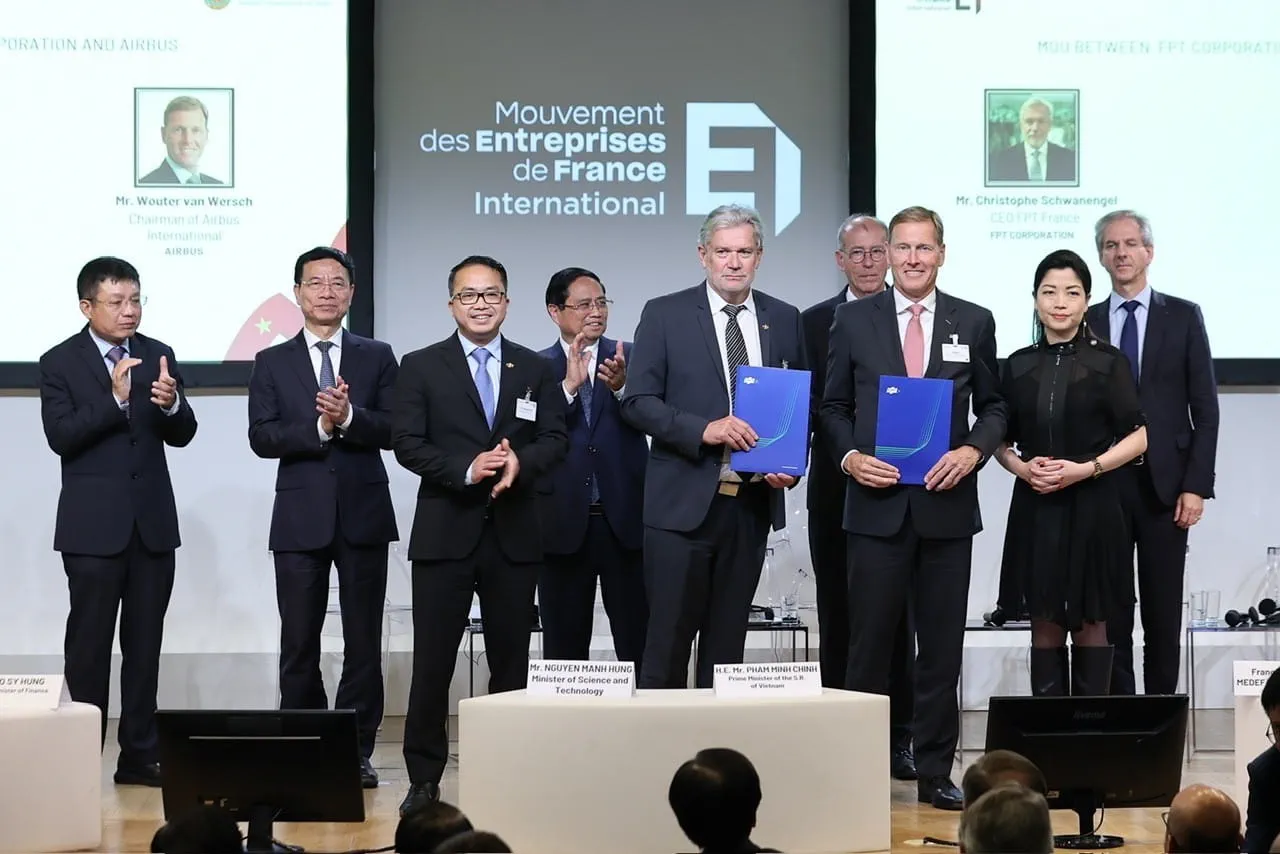
Momentum in the global business was also reflected in deal size and contract pipeline. Newly signed contract value exceeded 1.5 billion USD in 2025, while the number of deals above 10 million USD doubled year on year. Expansion across key markets such as the United States, Germany, and Singapore signaled a clear shift in FPT’s position in the global value chain, from an offshore delivery provider toward a partner in larger and longer-term transformation programs.

FPT AI Factories were accelerated with NVIDIA HGX B300 systems
Momentum carried further in 2025. FPT reported orders for 70 million chips, and exported its first shipment of power chips to Japan. The company recently announced the establishment of the
FPT Advanced Semiconductor Testing and Packaging Plant, a move designed to expand Vietnam’s advanced back-end manufacturing capacity and strengthen connectivity across the semiconductor value chain. FPT is no longer scaling only through digital services. The company is building strategic technology capability in areas expected to shape the next phase of regional and global competition.
Building the talent foundation for future growth
As FPT expands into advanced technologies, talent development has become a more central part of its strategy. The company has strengthened its education ecosystem to align more closely with emerging industry demand, particularly in artificial intelligence, semiconductors, automotive technology and other emerging fields.
By 2023, FPT had already started expanding training through partnerships tied to future technology demand, including an AI curriculum developed with Landing AI and semiconductor programs transferred from international partners across the FPT education system. In 2024, this direction became more visible with the launch of the Digital Automotive Technology major, alongside semiconductor-focused training pathways and specialized programs designed around international standards and industry needs.

FPT and Landing AI partnership announcement in 2023
By 2025, the education agenda had widened into a broader workforce strategy aligned with both FPT’s long-term direction and Vietnam’s national technology priorities. FPT reported 3,700 students enrolled in AI and semiconductor integrated circuit design programs and majors across the system, while AI education had been introduced to all learners from Grade 1 to Grade 12. FPT also joined major alliances linked to Resolution 57, including the Strategic Workforce Alliance, the Au Lac AI Alliance, and the Semiconductor Alliance, reinforcing a role that went beyond internal talent supply.
In 2026, FPT University officially launched the Robot and Artificial Intelligence major under Information Technology, with a focus on UAV and humanoid robotics. The program is designed to train high-quality talent with deep expertise in robotics and AI, and with the interdisciplinary capability to develop and apply intelligent robotic and AI solutions in real-world settings. Education, in this context, is no longer only supporting FPT’s own future in strategic technologies. It is becoming part of the infrastructure behind a more future-ready workforce for both FPT and Vietnam.
A five-year bridge into a new phase
From 2021 to 2025, FPT sustained strong growth, expanded its global delivery footprint, and moved more deeply into strategic technologies. Overseas IT services became the core growth driver. AI, semiconductors, automotive technology, and national digital transformation took on a larger role in the company’s direction. Education also became more closely tied to the technologies and workforce needs shaping the next cycle of growth.
More than a period of recovery, these five years marked a transition in capability, positioning, and ambition. FPT entered the post-Covid period with resilience and emerged with greater scale, stronger global reach, and a clearer strategy.
With artificial intelligence now shaping every layer of its operations, FPT is entering the next phase with stronger foundations to pursue higher-value opportunities, deepen its role in Vietnam’s technology landscape, and strengthen its position in the global technology market.