

 Enterprise AI is entering a new phase where the biggest constraint is no longer model access, but data readiness. While organizations continue investing heavily in copilots, agents, and AI infrastructure, many still struggle to move AI initiatives from experimentation into production because the underlying data environment is not ready to support scale.
From FPT’s experience supporting AI transformation across banking, healthcare, manufacturing, automotive, and energy sectors, enterprises often possess large volumes of data that remain fragmented across systems, constrained by privacy requirements, inconsistent in quality, or too narrow to reflect operational complexity at scale. The gap between a successful AI pilot and a production-ready AI system is often the gap between having data and having data that is usable, governed, representative, and accessible.
As synthetic data is moving into the strategic conversation, Forrester defines synthetic data as artificially generated data that mimics or extrapolates from real-world patterns while maintaining no direct link to the original source data, while Gartner has identified hyper-synthetic data as an emerging capability that can help organizations address real-data shortages, reduce costs, and accelerate AI development.
From Vast Data to More Usable Data
The assumption that more real-world data automatically produces better AI is becoming less reliable. Many enterprises hold extensive datasets that cannot be operationalized at the speed or level of trust AI systems require.
This challenge is particularly visible in industries where FPT works closely with global enterprises. Financial institutions may have years of transaction histories but limited examples of emerging fraud behavior. Healthcare organizations often possess rich clinical data, yet privacy obligations restrict how that information can be shared or used across teams. Manufacturers may collect operational data continuously, but critical equipment failures or abnormal production events may occur too infrequently to train resilient AI models.
Synthetic data helps address these limitations by creating controlled environments where AI systems can be tested, trained, and validated more efficiently. Rather than replacing real-world understanding, it augments constrained datasets, models edge cases, and accelerates experimentation without waiting for every condition to occur naturally.
The Strategic Value
Synthetic data is often discussed through the lens of privacy, but its broader strategic value is optionality. Enterprises increasingly need the ability to test AI systems under conditions that are expensive, dangerous, rare, or difficult to reproduce in real-world environments.
Fraud detection systems can be exposed to newly modeled attack patterns before those threats appear at scale. Clinical support tools can be tested against synthetic patient profiles before interacting with sensitive records. Industrial AI systems can train against rare equipment failures that may occur only occasionally but carry significant operational consequences.
The need for controlled experimentation is becoming increasingly relevant as enterprises move from isolated AI pilots toward enterprise-wide deployment. The ability to create adaptive learning environments helps organizations improve resilience, accelerate validation cycles, and reduce the operational risks associated with scaling AI systems.
Why Regulated Industries Care
The value of synthetic data becomes especially clear in industries where AI adoption is constrained by privacy, compliance, safety, and operational risk.
In banking, financial services, and insurance, synthetic data can support fraud simulation, risk modeling, customer analytics, and regulatory testing while reducing unnecessary exposure of sensitive customer information. In healthcare, synthetic patient records, medical imaging, and operational datasets can support AI model development and workflow optimization without depending entirely on identifiable patient data.
For sectors such as manufacturing, automotive, and energy, synthetic environments allow organizations to simulate rare equipment failures, abnormal production conditions, and edge-case safety scenarios at scale. These are areas where FPT has been actively supporting enterprise transformation initiatives, particularly in industries where operational continuity, governance, and reliability are critical requirements.
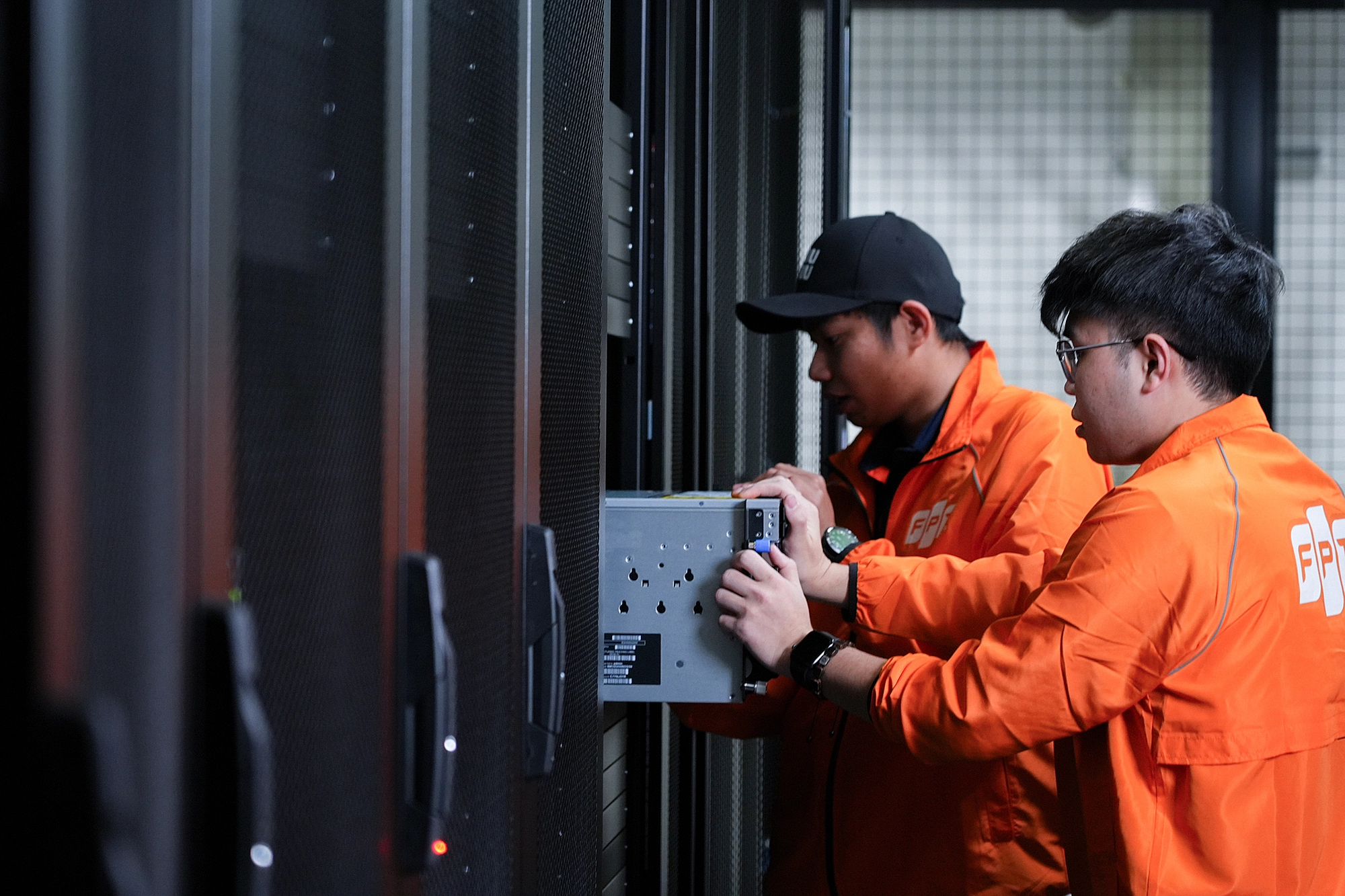
As regulated industries seek to balance innovation with governance, FPT AI Factory provides the foundation for developing and scaling trusted AI applications
Synthetic Data Requires Governance by Design
Synthetic data is not automatically accurate, unbiased, or safe simply because it is artificially generated. Poorly designed synthetic datasets can reproduce historical bias, distort real-world conditions, or create false confidence in AI systems that have not been properly validated.
Organizations therefore need clear standards around how synthetic data is generated, validated, labeled, stored, shared, and retired. Validation requirements should also rise with the consequence of the use case, particularly for systems supporting fraud detection, healthcare decisions, or automotive safety functions.
Synthetic data is not viewed as a standalone technical capability, but as part of a broader enterprise AI governance framework spanning data architecture, security, infrastructure, validation, and operational oversight.
Building the Foundations for AI-Ready Enterprises
The rise of synthetic data reinforces a broader industry shift: scalable AI depends on more than models alone. Sustainable enterprise AI requires integrated foundations spanning governance, engineering, infrastructure, security, and industry expertise.
This philosophy is reflected across FPT’s AI-first ecosystem. Demonstrated through FPT’s end-to-end AI platform FleziPT, the solution enables enterprise transformation through AI-driven software development life cycles, AI-powered solutions, and AI-augmented engineering capabilities designed to embed AI into planning, development, testing, and operations. Meanwhile, CASAN, FPT’s five-level AI transformation framework that helps enterprises progress from fragmented experimentation to governed, enterprise-wide AI adoption. Spanning Curious, Augmented, Standard, Automatic, and Native, the framework provides a structured roadmap for organisations to assess readiness, scale AI capabilities, embed AI into core operations, and ultimately become AI-native businesses.
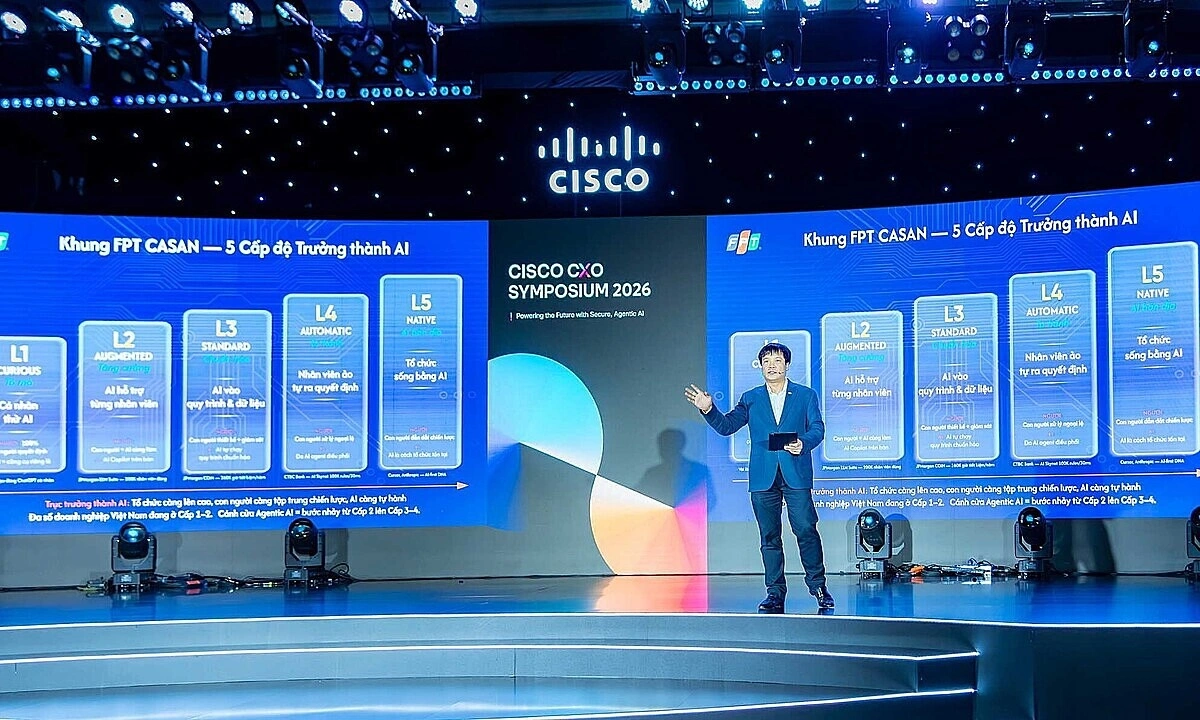 FPT introduces CASAN - five-level AI transformation framework for global enterprises
FPT’s AI Factories in Vietnam and Japan further strengthen this foundation by providing high-performance computing infrastructure for enterprise-scale AI workloads. Powered by NVIDIA H100, H200, and B300 GPUs, the infrastructure is designed to support advanced AI training, simulation, and deployment at scale, with system capabilities ranked among the world’s top 40 supercomputers. Combined with governance frameworks and industry-specific engineering expertise, these capabilities help organizations build AI systems that are not only faster to develop, but more resilient, secure, and production-ready.
The Next AI Leaders Will Not Wait for Perfect Data
The organizations that lead the next phase of AI will not necessarily be those with the largest raw datasets. They will be the organizations that know how to build the most usable, adaptive, and trustworthy data environments.
Real-world data will remain essential because it anchors AI systems in actual operational conditions, customer behavior, and market realities. However, relying on real-world data alone is becoming increasingly insufficient in environments shaped by regulatory complexity, operational risk, and accelerating change.
For AI-first enterprises, synthetic data is becoming more than a technical enabler. It is becoming part of the operating architecture for scalable AI, helping organizations move faster, test more thoroughly, and reduce the friction between experimentation and enterprise-wide deployment.